
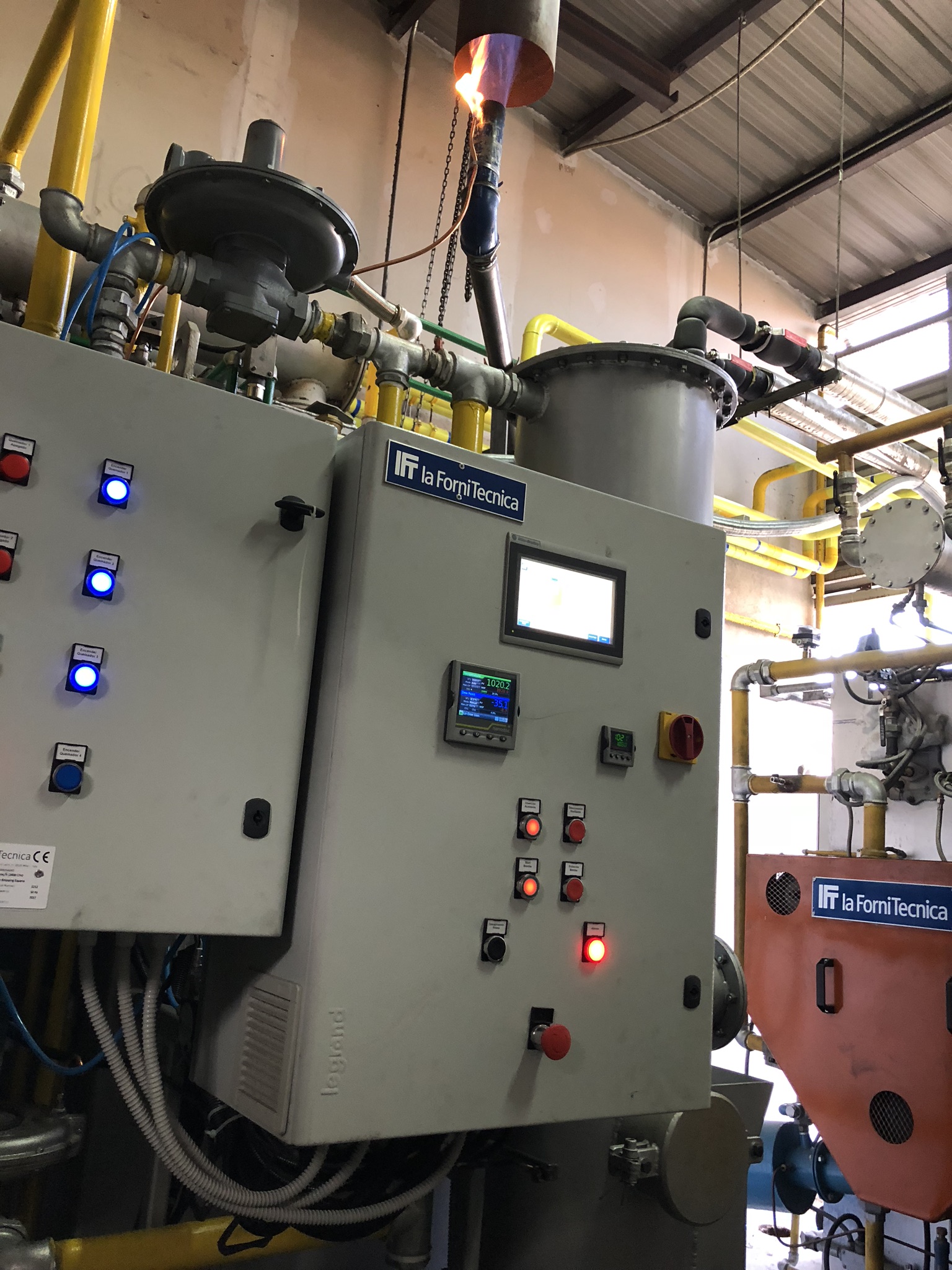
Dew point expresses the water-vapour content of the atmosphere. In endothermic systems, it is a useful indicator of gas equilibrium and of whether the atmosphere tends to be oxidising or carburising.
What it represents
A higher dew point indicates more water vapour. With other conditions unchanged, this generally makes the atmosphere less carburising and more oxidising.
Where to measure it
The value can change between the generator outlet and the furnace because of condensation, air infiltration, piping and gas mixing. The sampling point must therefore be clearly defined and kept consistent.
Causes of drift
Cooling-water temperature, reaction quality, air infiltration, condensation and sampling-system problems can all change the reading.
Comparison with other parameters
Dew point should be interpreted together with CO₂, CH₄, furnace temperature and the oxygen-probe signal. No single parameter describes the atmosphere completely.
Recommended checks
- Clearly defined sampling point
- Heated sampling line or one free from condensation
- Verified instrument
- Comparison with gas analysis
- Trend recording over time