
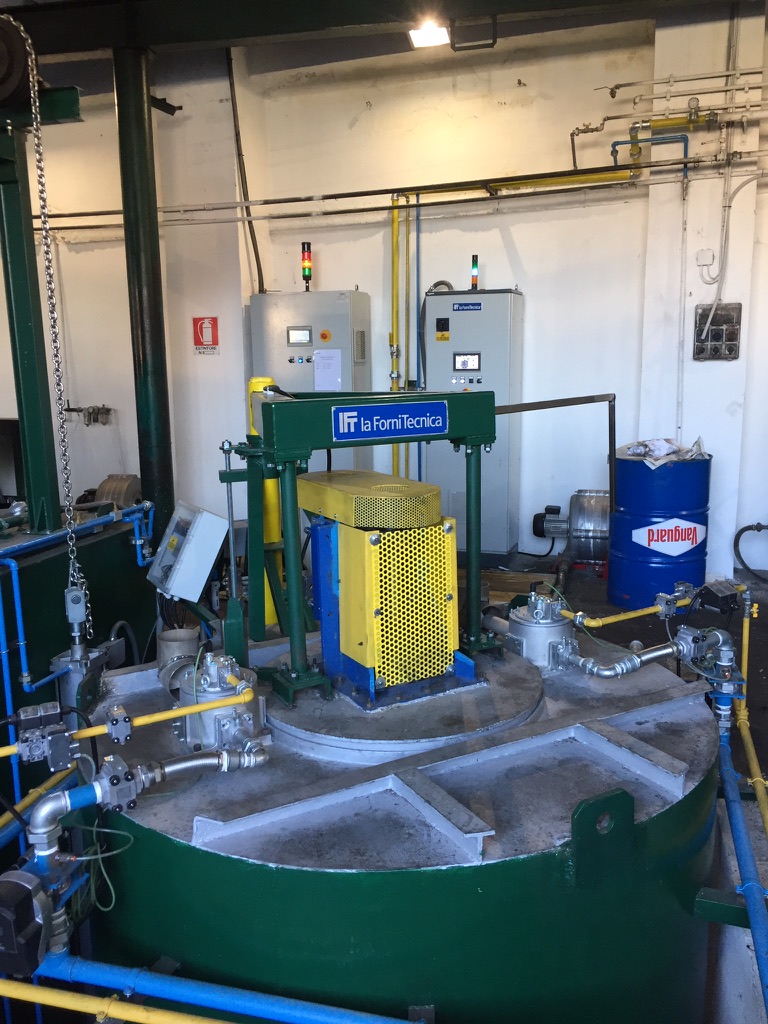
Catalyst life is not the same in every installation. Thermal load, gas quality, contaminants, start-up cycles and maintenance all affect the rate at which catalytic activity declines.
Typical symptoms
Loss of performance may appear as increasing residual methane, lower CO, unstable dew point, more difficult control and soot formation.
- Increasing CH₄ under unchanged operating conditions
- Higher natural-gas consumption
- Longer stabilisation times
- Differences between retorts or zones
Before replacement
First rule out errors in temperature, flow rate, gas analysis and air-to-gas ratio. Replacing the catalyst will not correct problems outside the catalytic bed.
After replacement
The new catalyst must be loaded correctly, heated according to the specified procedure and verified by gas analysis during commissioning.
Recommended checks
- Review historical readings
- Verify thermocouples
- Check flow rate
- Inspect the retort
- Compare readings before and after replacement