
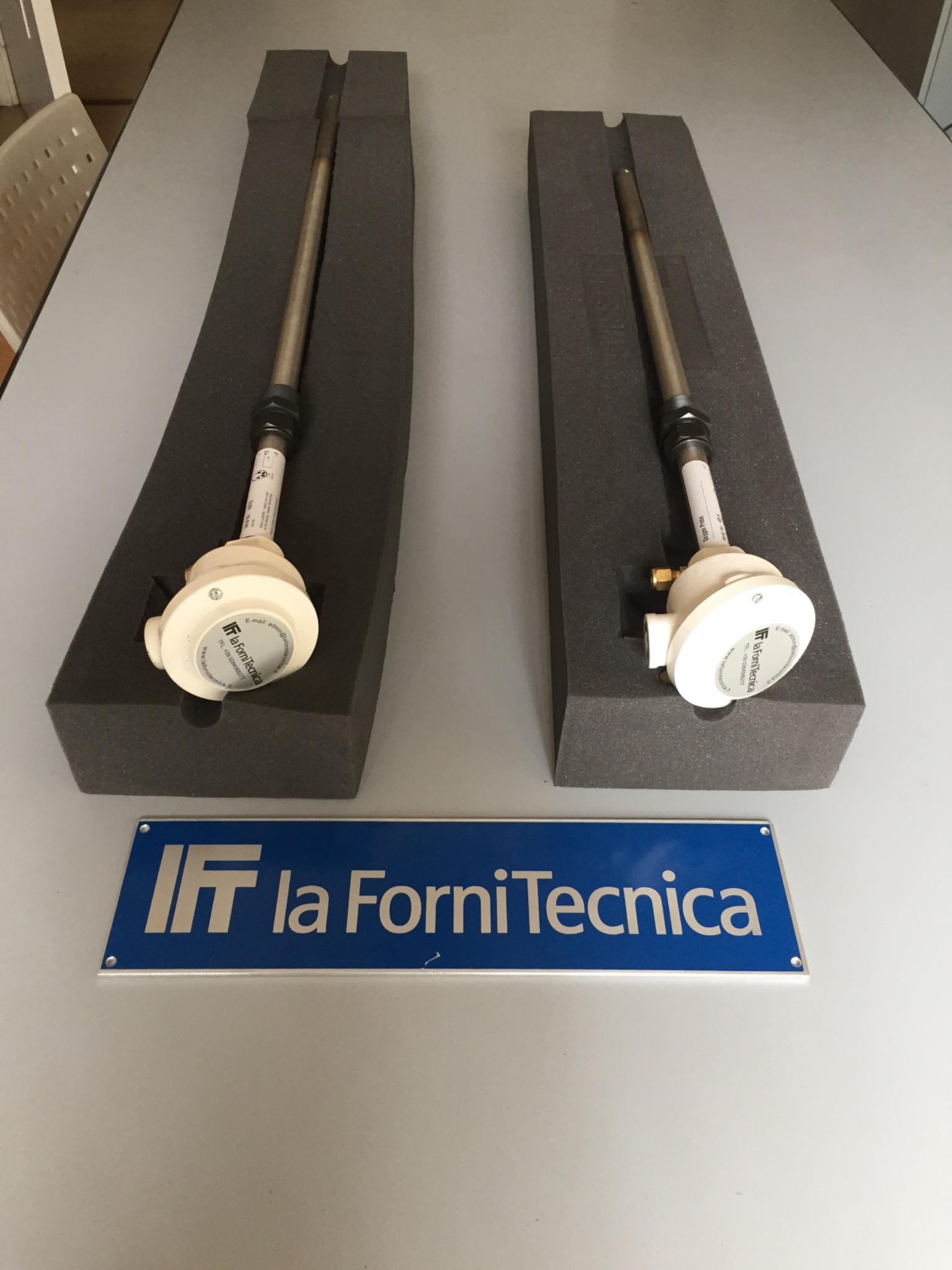
The oxygen probe is one of the most important instruments for controlling carburising atmospheres. Its signal must, however, be interpreted correctly and verified periodically.
Measurement principle
The zirconia element generates a voltage according to the difference in oxygen concentration between the furnace atmosphere and the reference air. At high temperature, the controller uses this signal to calculate carbon potential.
Why the reading can be incorrect
Contamination, soot, cracks, reference-air problems, incorrect wiring or temperature-compensation errors can distort the signal.
- Slow drift of the reading
- Risposta troppo lenta
- Differenze tra sonde vicine
- Readings inconsistent with gas analysis
How to verify the probe
A reliable verification compares millivolts, temperature and atmosphere composition. Temporarily swapping channels or controllers can help distinguish a probe problem from an instrument problem.
Recommended checks
- Pulizia e integrità
- Reference air
- Cablaggio e polarità
- Confronto mV
- Analisi gas indipendente