
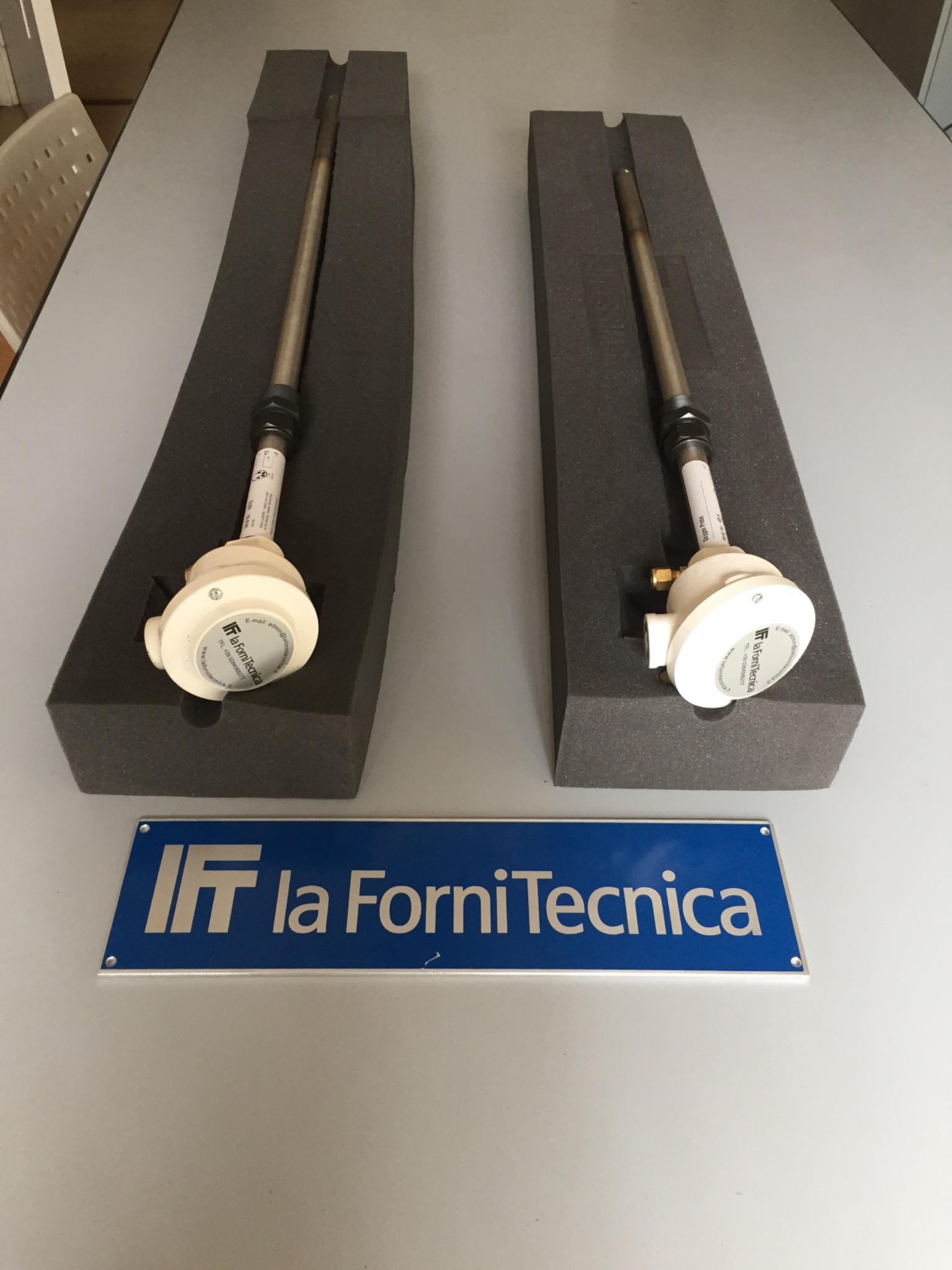
Carbon potential is not measured directly. It is calculated from the oxygen-probe signal, furnace temperature and compensation parameters. The displayed value should therefore be checked periodically against an independent atmosphere analysis.
The oxygen probe
The probe measures the voltage generated by the difference in oxygen concentration between the furnace atmosphere and the reference air. The controller converts this signal into carbon potential using the furnace temperature and the configured coefficients.
- Millivolt signal
- Furnace temperature
- Correction factors
- Quality of the reference air
Comparison with gas analysis
CO, CO₂ and CH₄ help determine whether the calculated value is credible. A controller may display a stable reading even when the probe is contaminated, sampling is incorrect or the atmosphere is not homogeneous.
- Analysis close to the controlled zone
- Clean sampling line
- Verified analyser
- Sufficient stabilisation time
Causes of deviation
Common causes include probe drift, air infiltration, condensation in sampling lines, incorrect compensation settings and differences between the probe position and the gas-sampling point.
Recommended checks
- Compare probe millivolts with an independent instrument
- Verify furnace temperature
- Analyse CO, CO₂ and CH₄
- Clean the sampling lance
- Check for air infiltration